EventMobi Alternatives: 6 Affordable & Flexible Options
March 5, 2026 · Wout Criekemans · 20 minute read

Table of Contents
Most event managers looking at EventMobi alternatives run into the same two problems: the pricing is hard to justify, and the all-in-one scope is more than they need.
EventMobi costs at least €3,000 per event. Branded apps, advanced registration, and comprehensive engagement tools are often locked behind higher-tier plans or sold as add-ons.
If you need a more affordable alternative that still delivers a professional attendee experience, this guide covers six platforms ranging from €179 per event to annual subscriptions under €3,000. Each offers transparent pricing, self-service setup, and strong customization—without forcing you to replace your entire event tech stack.
Here's a quick summary:
Platform | Starting Price | Pricing Model | Best Fit |
LineUpr | 179 € per event (Plus Plan) | Per-event (optional annual bundles) | Teams that need a flexible, easy-to-use engagement layer |
Eventee | 1,499 € per event (Solo Plan) | Per-event or annual | Small–mid events wanting one consolidated system |
Whova | Quote-based + 3.0% + 0.99 € per paid ticket | Custom quote | Conferences consolidating multiple workflows |
Eventtia | 1,250 € per year (Essential Plan) | Annual commitment | Hybrid or recurring annual programs |
Accelevents | 7,500 € per event (Professional Plan) | Per-event or enterprise tier | Large virtual or hybrid events |
Swapcard | 610 € per year (Starter Plan) | Annual subscription | Multi-event organizations prioritizing networking |
1. LineUpr
LineUpr is an event engagement platform that helps event coordinators and marketing managers deliver professional mobile event experiences—without replacing existing registration or ticketing systems.
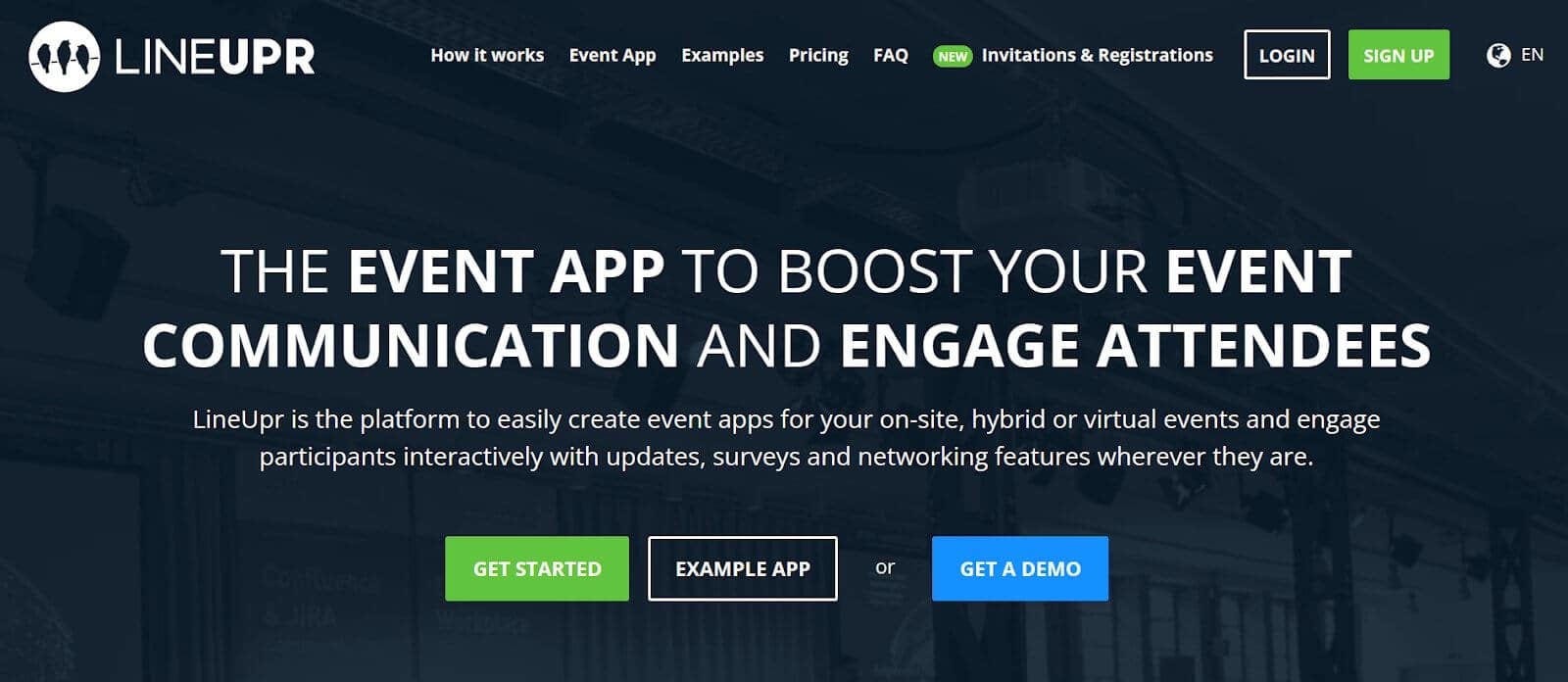
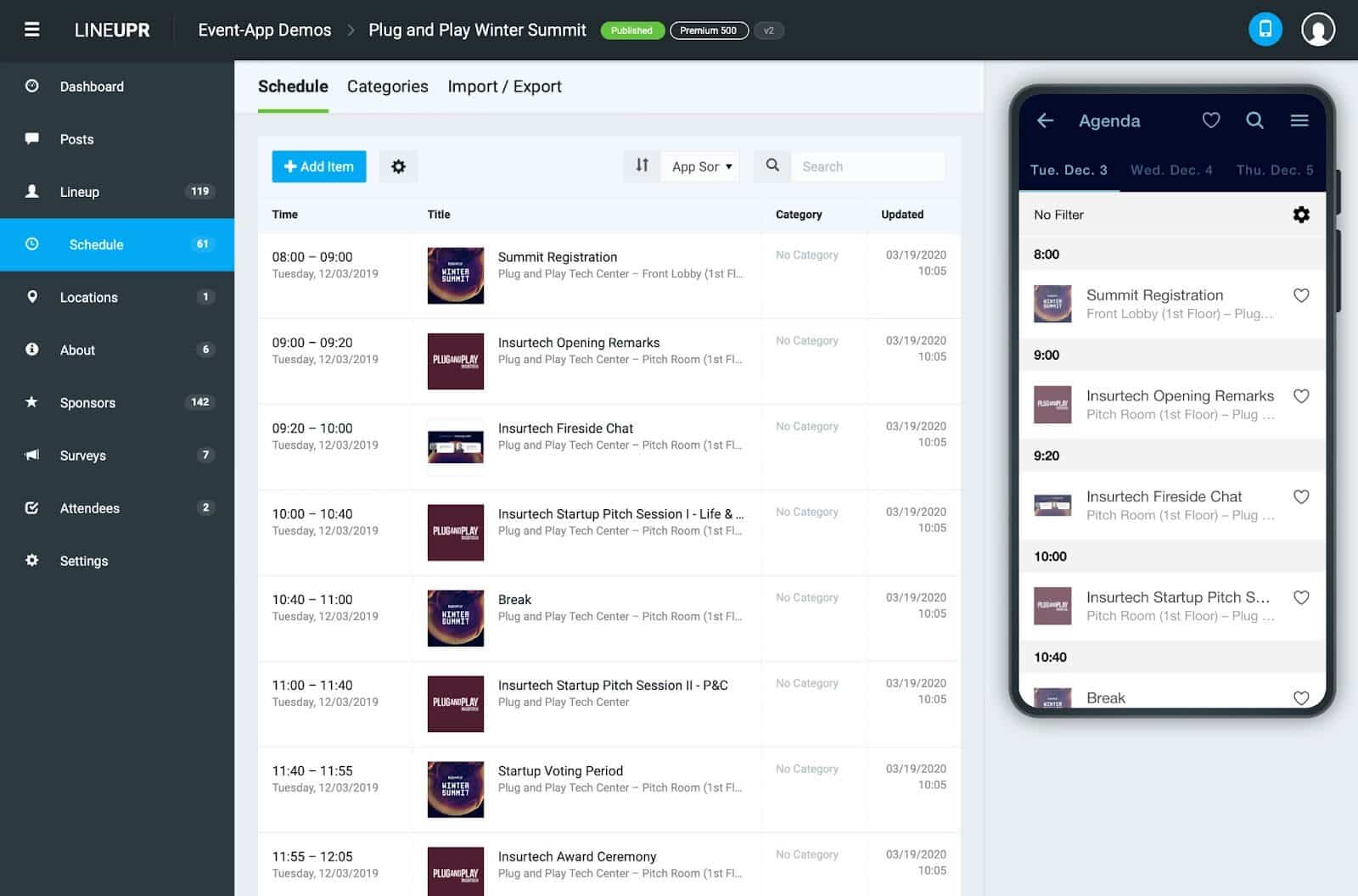
Where EventMobi pulls you into an all-in-one suite, LineUpr operates as a standalone engagement layer. Your registration and ticketing stay where they are. LineUpr handles agenda, speaker profiles, live polls, Q&A, and attendee networking. Once you've built your event app, attendees access it via a browser link or QR code—no app store download, no installation step.
If the all-in-one scope of EventMobi felt like more commitment than the problem required, LineUpr is built around the opposite premise: change as little as possible to get the engagement layer you're missing.
Why We Chose LineUpr
Where EventMobi requires you to adopt an entire ecosystem: registration, ticketing, event app, and communications. LineUpr lets you keep the tools that already work and adds only the engagement layer you’re missing, saving cost and making it easy to set up events faster.
LineUpr works alongside your existing registration system
If your registration and check-in workflows already function reliably, adopting an all-in-one platform means replacing something that isn't broken—and taking on the migration risk, staff retraining, and workflow rebuilding that comes with it.
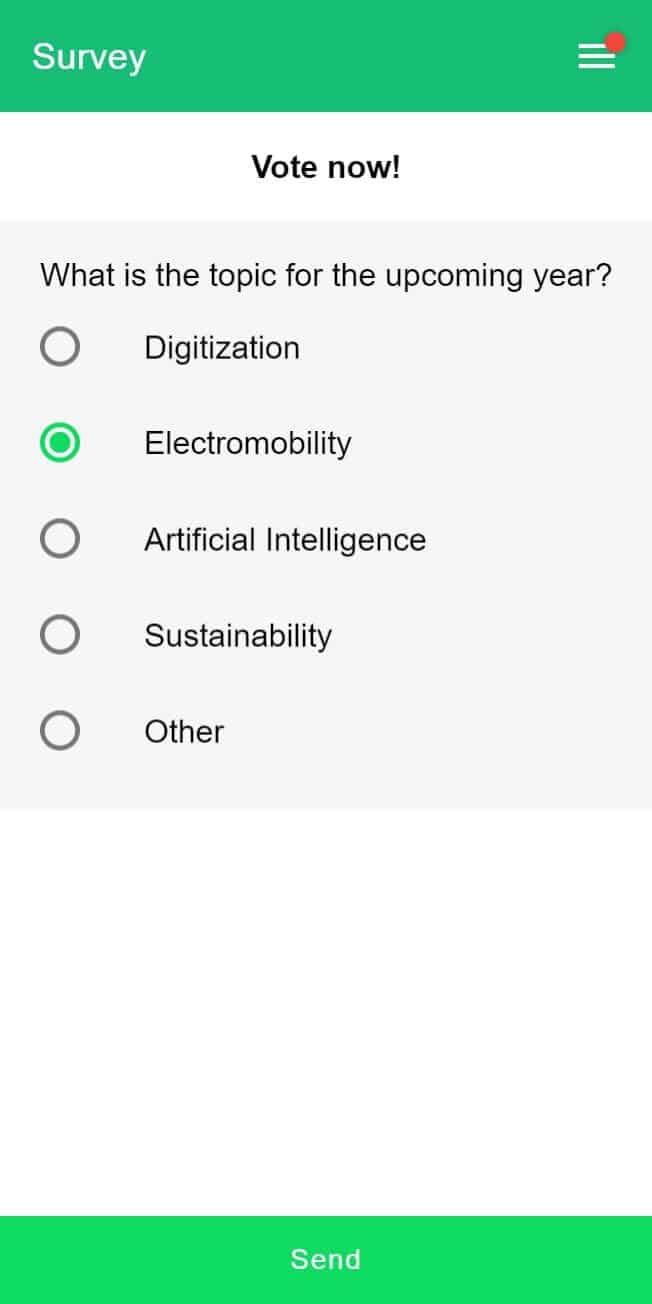
With LineUpr, your registration, ticketing, and pre-event communications stay in place. LineUpr only touches the engagement side: agenda delivery, live polls, Q&A, and networking.
That narrower scope is the point. For B2B event teams whose pain is specifically about attendee engagement—not registration, ticketing, or communications—the change you're making matches the problem you're solving, and nothing more.
Setup takes hours, not a project cycle
The visual editor handles branding, layout, and content configuration in a live preview. You adjust colors, logos, and structure directly, without going through external development or an IT team—a meaningful difference from platforms where setup requires technical staff or a vendor-led onboarding cycle.
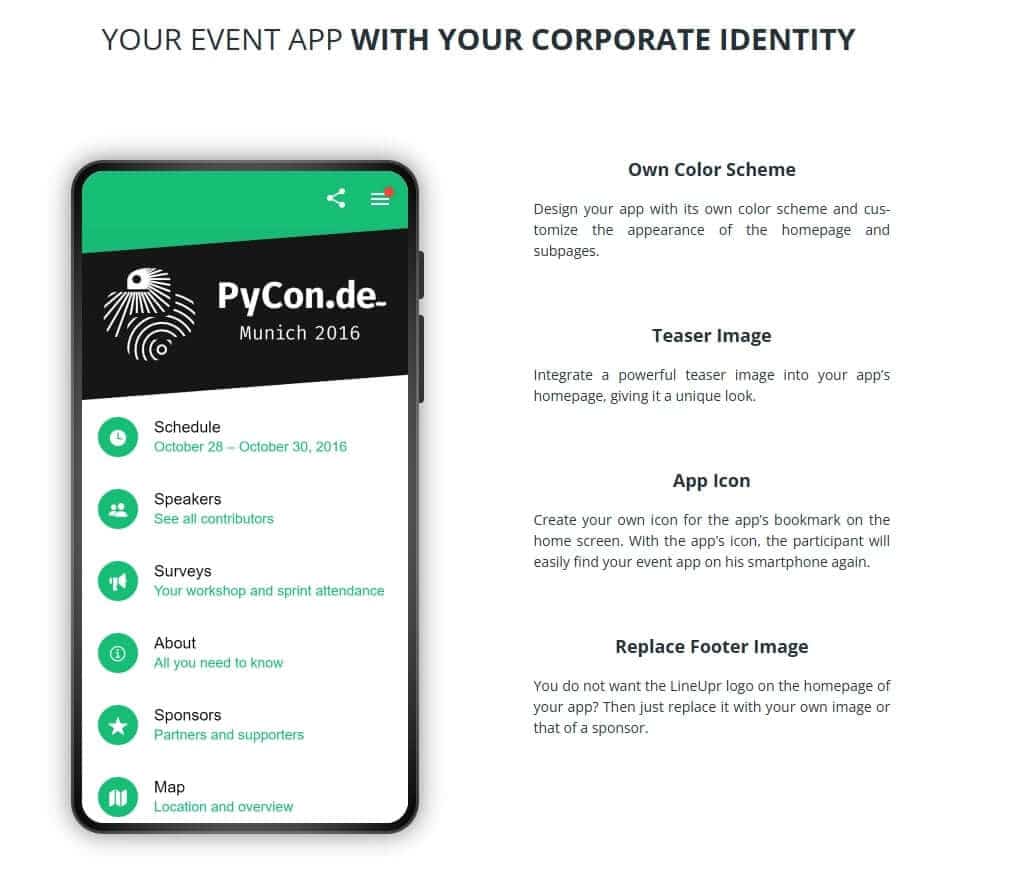
Marketing Club Dresden built a complete event app in roughly four hours using the editor, handling branding and content configuration without developer involvement. Perform Better Europe described a similar experience—setup was straightforward once their event content was prepared.
In both cases, the teams had no dedicated IT resources for internal events and the timeline was an afternoon rather than a project cycle.
Attendees access events in their browser; no download required
LineUpr runs as a Progressive Web App. Attendees open it via a URL or QR code rather than downloading from an app store. There's no submission process for you to manage and no installation step for attendees to abandon.
This matters most for short-duration events—conferences, workshops, one-day programs—where you don't have weeks of lead time to push attendees through a download process.
Amadeu Antonio Stiftung, a German nonprofit, used LineUpr's browser-based model to eliminate printed programs entirely while staying within budget. They reported attendee adoption above 100%. When there's nothing to install, the gap between sharing the link and people actually using the app gets significantly smaller.
Key features
Event scheduling & real-time updates: Push schedule changes, speaker updates, and room assignments to every attendee's device instantly—no reprinting programs, no mass emails, no confusion at the registration desk.
Interactive engagement tools: Run live polls, collect Q&A questions with attendee upvoting, and launch surveys without switching between platforms or asking attendees to download separate apps.
Attendee networking: Let attendees create profiles, message each other directly, and schedule 1:1 video calls—so networking happens before, during, and after your event.
Offline access: Attendees can view agendas, speaker bios, and venue maps without Wi-Fi. Conference center internet shouldn't determine whether people know where to go next.
Multi-language support: Serve international attendees with 20+ language options built in—one app, multiple languages, no separate versions to maintain.
Pros
Works alongside existing registration tools—no platform migration required
Per-event pricing with no annual lock-in
Self-service setup achievable in hours without an IT team
Browser-based access increases attendee adoption
Professional event app experience without agency development costs
Cons
Not a full event management suite—does not handle registration or ticketing
Pricing
LineUpr's Flex pricing (pay-per-event) ranges from €179 to €539 per event, depending on your needs. The more events you host per year, the lower your cost per event.
Plus: From €179/event — agenda, speaker profiles, sponsor listings, notifications, custom branding
Premium: From €299/event — adds live polls, Q&A, feedback tools, and analytics
Platinum: From €539/event — adds multi-language support, PDF attachments, attendee networking, and private/public chats
For pay-per-registration pricing (around 50 attendees), tiers run from €215 to €647 per event.
Best for
LineUpr works best for mid-sized organizations (50–500 employees) running one to four professional events annually who need attendee engagement tools without replacing existing registration systems. It's a strong fit for event coordinators, marketing managers, and associations operating without dedicated IT teams.
See the difference for yourself, risk free. Build your complete event app in LineUpr. Test every feature. Preview it with your team. No credit card required.
2. Eventee
Eventee is an event management platform that combines mobile event apps, registration, attendee check-in, and analytics in a single system. Organizers manage agendas, speakers, sponsors, networking, and engagement tools from one centralized dashboard, with native iOS and Android apps alongside a web-based version.
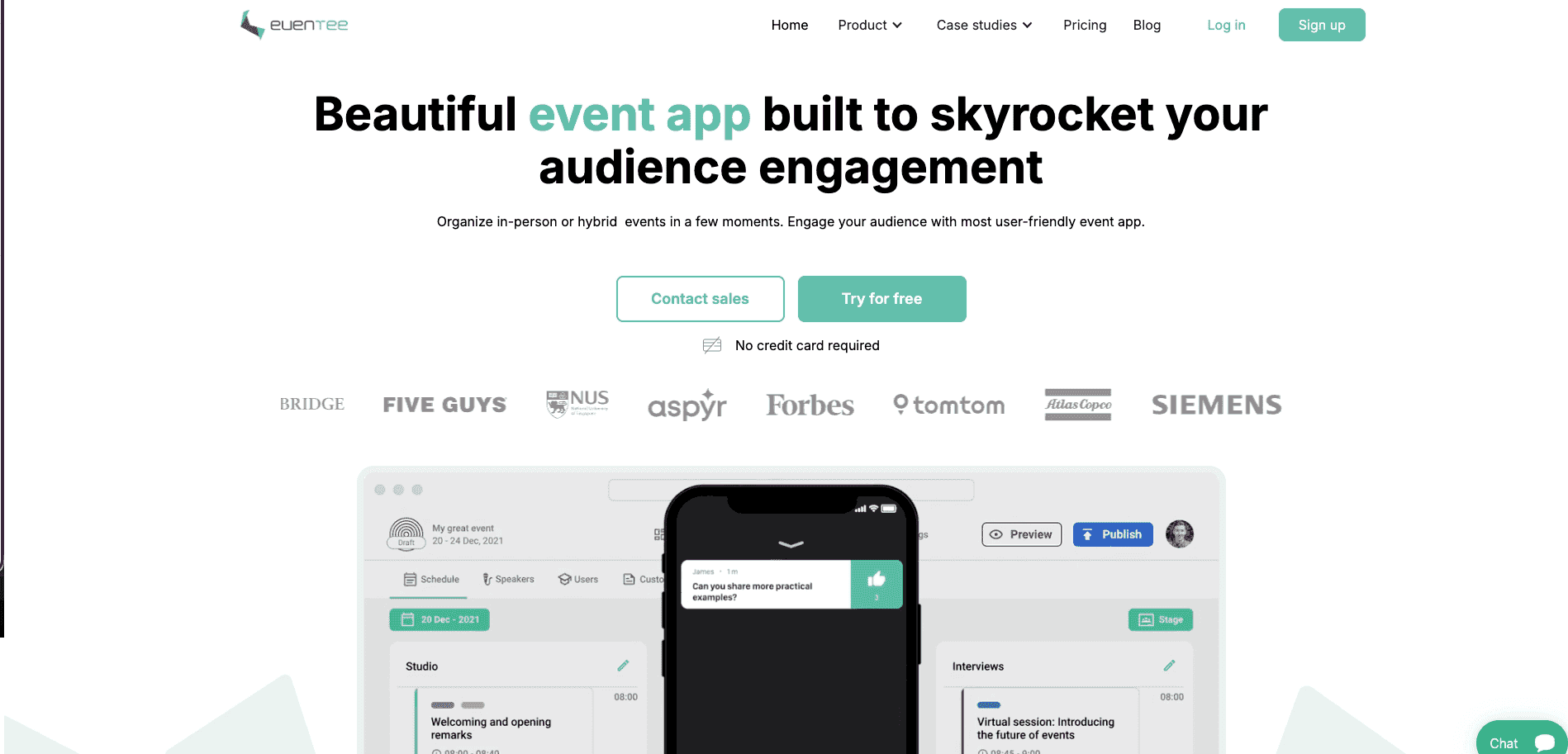
Eventee starts at €1,499 per event—roughly half of EventMobi's entry point—with pricing published directly on their site. You can see exactly what each plan includes before talking to anyone.
Why we chose Eventee
Eventee gives you EventMobi's consolidated approach—registration, check-in, and engagement in one place—without the pricing opacity or feature sprawl.
Moving your registration, check-in, and engagement into a single platform only saves time if the platform itself doesn't create a new learning curve. Eventee is consistently described in Capterra and GetApp reviews as intuitive and straightforward. The drag-and-drop agenda builder, branding controls, and sponsor profile configuration all work without developer involvement.
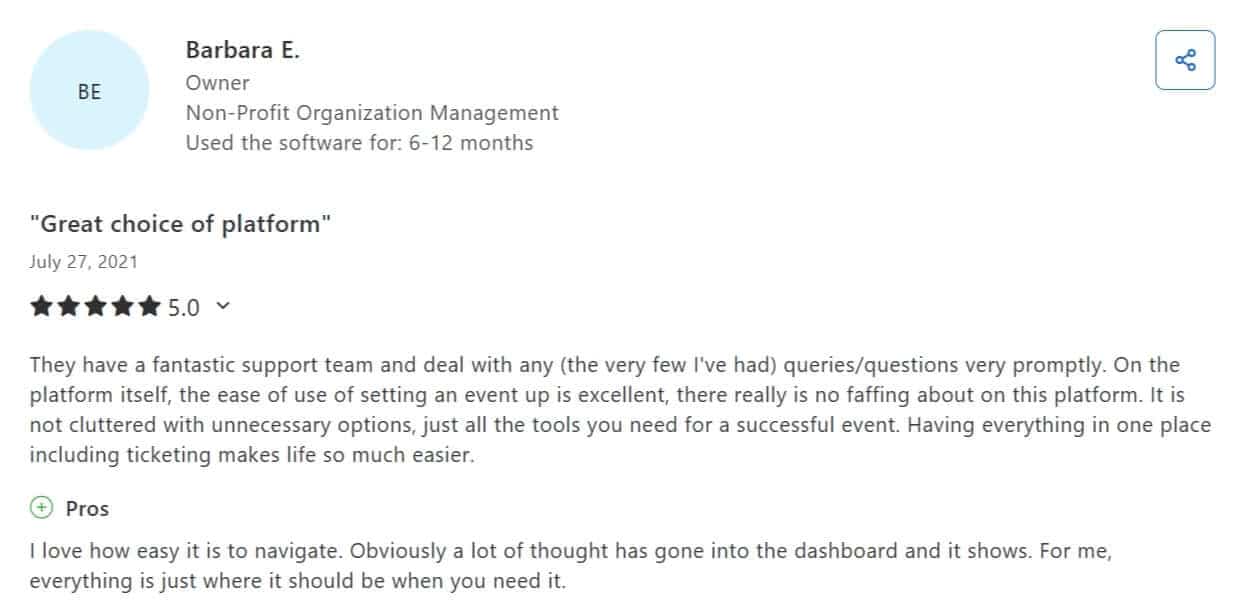 iBecause registration and QR-based check-in are built in, your attendee data and workflows live inside one system rather than spread across separate tools. That consolidation is the core tradeoff: you're replacing whatever registration or check-in tools you currently use, not layering engagement on top of them.
For teams whose current registration setup is part of the problem—clunky, disconnected from the event app, hard to manage on-site—that's the appeal. If your registration already works and you just need engagement, Eventee asks you to change more than necessary.
Key features
Native iOS and Android apps, plus web-based access for attendees
Built-in registration and RSVP workflows
QR code check-in and badge printing for on-site management
Drag-and-drop agenda builder
Live polls, Q&A, and gamification tools
Attendee matchmaking and meeting scheduling
Sponsor and exhibitor profiles within the event app
Integrations with Eventbrite, GoOut, Tito, and Mitingu
Pros
Pricing tiers are published publicly—no sales call required to budget
Native mobile apps for both iOS and Android
Registration and on-site check-in included in the same platform
Consistently described as intuitive in user reviews
Cons
Branding customization is more limited compared to fully white-label platforms
No built-in livestreaming—virtual events require third-party tools
Annual plans required for multi-event usage, which may not suit one-off events
Pricing
Eventee starts at €1,499 for a single event (up to 500 attendees). The Business plan covers six events at €2,999/year. The Enterprise plan covers twelve events at €4,999/year. A free trial is available on all tiers.
Best for
Eventee works best for small to mid-sized events seeking a single system for registration, check-in, and mobile engagement with transparent pricing.
3. Whova
Whova is an all-in-one event management platform that combines registration, ticketing, engagement, networking, and analytics in a single ecosystem. Organizers manage registration forms, check-in, agendas, messaging, sponsor profiles, and reporting from one dashboard.
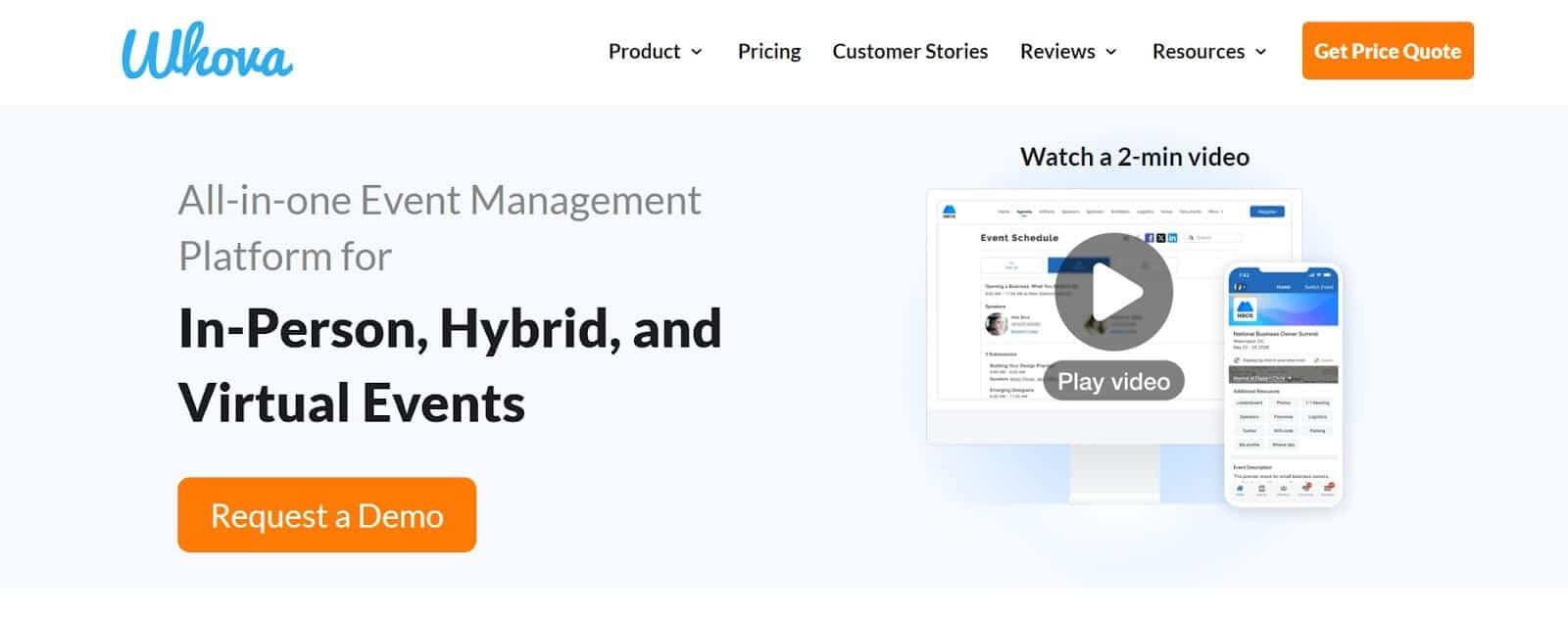
Where EventMobi gates essential features behind higher tiers and charges €3,000+ per event, Whova bundles the full event lifecycle—from registration through post-event reporting—into one system. The tradeoff: all events run inside a universal Whova-branded container app, which simplifies deployment but limits standalone branding.
Why we chose Whova
Whova's value is consolidation. Registration, check-in kiosks, badge printing, networking, engagement tools, and analytics all operate within a single platform.
User reviews on Capterra consistently highlight this as the primary draw. Teams that were previously stitching together separate tools for registration, engagement, and reporting can centralize everything in one place.
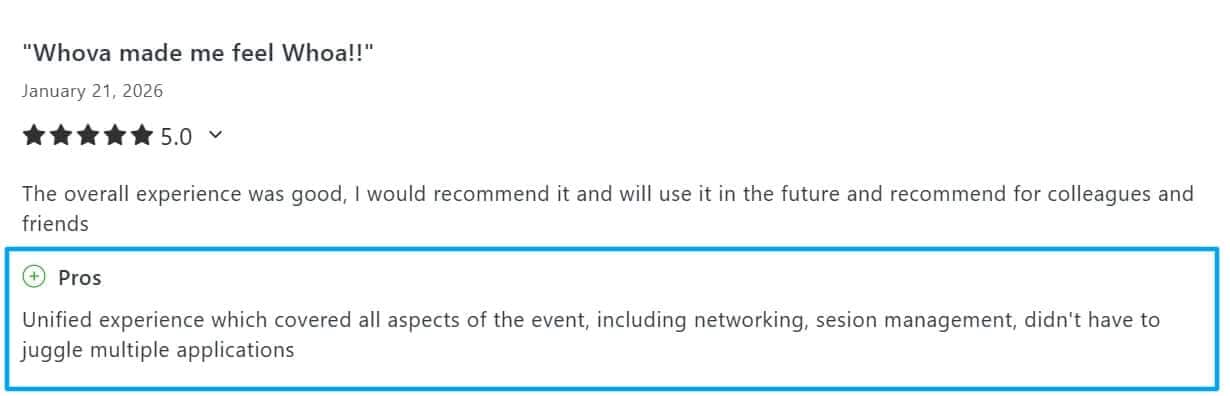
That consolidation comes at a real cost in flexibility, though—worth understanding before you commit. Every event you run lives inside the Whova-branded application. Attendees download the Whova app once and access all their events from there.
For conferences and associations where content matters more than event-specific branding, that works fine. For organizations where each event needs its own branded identity—a standalone app with your logo, no third-party branding visible—Whova's container model won't deliver that.
Whova's networking tools go deeper than most. Attendee messaging, community boards, and algorithm-based matchmaking are built in, along with polls, Q&A, gamification, and push notifications. Website building and abstract management are also included, making Whova particularly relevant for academic conferences and association events where those features are standard requirements.
Adopting Whova means migrating your registration and engagement workflows into the platform. For teams currently managing three or four disconnected tools, that consolidation can be worth the migration effort—as long as the branding tradeoff doesn't disqualify it.
Key features
Customizable registration forms with Stripe integration for payment processing
QR code check-in kiosks and badge printing for on-site operations
Universal container mobile app (events are not standalone white-labeled apps)
Live polls, Q&A, and gamification tools
Attendee messaging and scheduled meetup scheduling
Sponsor and exhibitor management tools integrated into the platform
Pros
Covers the full event lifecycle: registration, engagement, check-in, and post-event reporting
Networking tools include messaging and matchmaking
Registration and on-site check-in in the same system
Reporting and analytics dashboards included
Cons
Quote-based pricing requires direct contact to determine total cost
Container app structure limits standalone white-label branding
Additional features may incur add-on costs depending on configuration
Adopting Whova typically means consolidating multiple workflows into the platform
Pricing
Fill out the form on the pricing page and the sales team will send a custom quote. Whova publicly discloses a 3.0% + €0.99 per paid ticket processing fee.
Best for
Whova works best for mid- to large-sized conferences and associations that want full-lifecycle consolidation and strong networking tools, where event-specific standalone branding is not a requirement.
4. Eventtia
Eventtia is an all-in-one event management platform for in-person, virtual, and hybrid events. It combines registration, ticketing, email communications, agenda management, and virtual components—including livestreaming with on-demand replay—in one system. Attendees access events through a browser-based web app; staff use a dedicated check-in application.
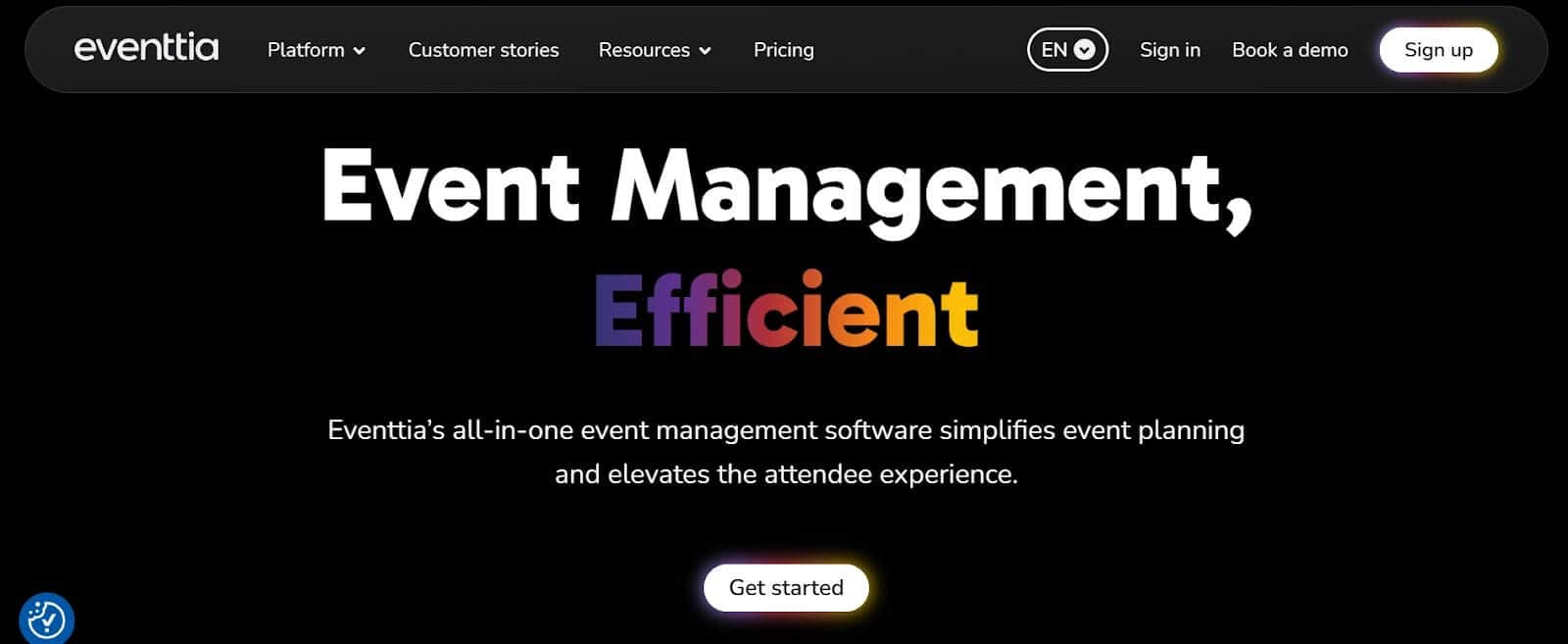
Where EventMobi gates virtual features behind higher tiers and requires a sales conversation to see pricing, Eventtia publishes transparent annual pricing directly on its site. All plans require a 12-month commitment and payment via wire transfer, which makes Eventtia a better fit for organizations running recurring programs year-round than for teams evaluating with a single event.
Why we chose Eventtia
Eventtia's strength is hybrid and virtual event support built into the core platform at a price point you can see before talking to sales.
Registration, ticketing, email marketing, and livestreaming all operate inside the same system. That matters specifically for hybrid events, because the usual alternative is stitching together a registration tool, a streaming platform, an email tool, and an engagement app—then trying to keep attendee data consistent across all four. Eventtia eliminates that fragmentation.
Custom registration fields, attendee categories, discount codes, and email workflows are all configurable without developer support. Ticket delivery includes WhatsApp PDF options alongside email.
The attendee experience is browser-based rather than native app-based. Virtual sessions include on-demand replay built in, so recorded content is available to attendees after the event without moving it to a separate hosting platform.
For organizations running a mix of in-person and virtual programming, having both sides managed in the same system with the same attendee data is where Eventtia's annual commitment starts to pay for itself.
Key features
Built-in registration, ticketing, and on-site check-in on one platform
Integrated email marketing tools for attendee communications
Browser-based web app for attendees—no standalone native mobile app
Livestreaming with on-demand replay for virtual and hybrid sessions
Live Q&A, polls, and attendee matchmaking
Sponsor and exhibitor management
Analytics dashboards with API and Zapier integrations
Pros
Annual pricing tiers are published—no sales call required to see base costs
Registration, ticketing, email, and livestreaming operate inside the same system
Custom registration forms, attendee categories, discount codes, and email workflows are built in
Cons
All plans require a 12-month commitment, even for a single event
Payment processed via wire transfer rather than standard credit card checkout
No standalone native mobile app—attendees access events through a browser
Some users report a learning curve when configuring hybrid workflows and integrations
Pricing
Annual credit-based model. Essential starts at €1,650/year, Premium at €2,500/year, and Networking at €3,500/year. Enterprise pricing requires inquiry. All plans require a 12-month commitment and include onboarding, with payment via wire transfer.
Best for
Eventtia works best for B2B event teams running recurring hybrid or virtual programs who want registration, email, streaming, and engagement in one system—and are willing to commit annually to get integrated virtual infrastructure.
5. Accelevents
Accelevents is an enterprise-grade event platform built for large-scale in-person, virtual, and hybrid events. It combines registration, ticketing, livestreaming, networking, exhibitor management, and analytics into one system. Attendees access events through a browser-based virtual hub, with optional native mobile apps available.
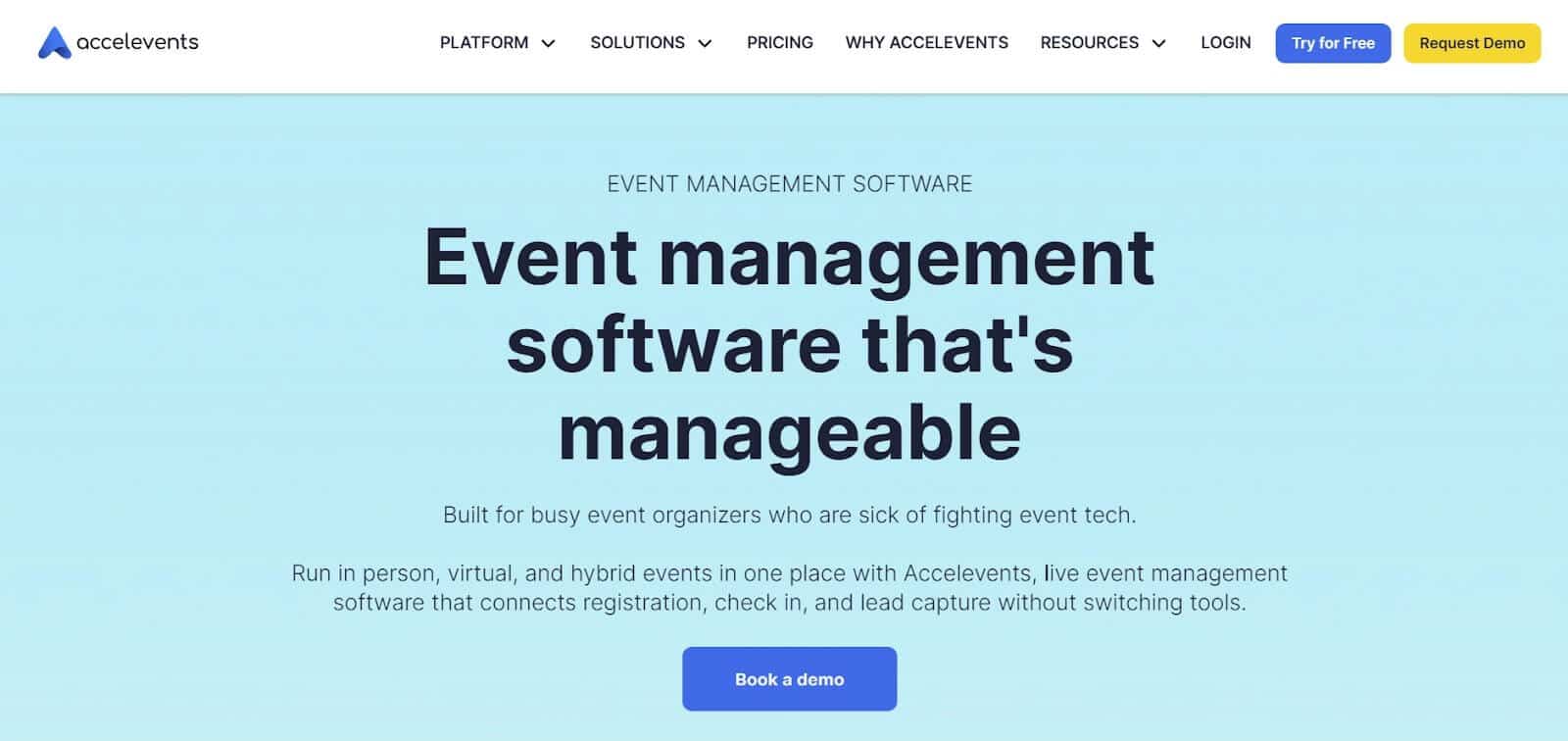
Accelevents occupies a different tier than EventMobi. Where EventMobi bundles registration and engagement for mid-sized events, Accelevents is built for organizations that need customizable virtual environments, branded expo halls, sponsor lead capture, and cross-event analytics. The scope is larger, the infrastructure goes deeper, and the pricing reflects that.
Why we chose Accelevents
Accelevents belongs on this list for organizations whose virtual and hybrid events have outgrown what mid-market platforms can deliver.
The platform centralizes registration, livestreaming, networking, and sponsor booths inside one system. Where it goes further than most alternatives is the virtual environment itself. Branded lobbies, expo halls, and sponsor booths can be customized within the platform. Higher tiers include custom CSS options, so the virtual experience doesn't look like a template.
For organizations running large conferences with exhibitor programs, that level of control over the virtual space is where Accelevents separates from platforms that treat virtual as an add-on feature.
User reviews on FinancesOnline consistently highlight scalability. Organizers describe starting with smaller pilot events and scaling to large virtual conferences without switching platforms.
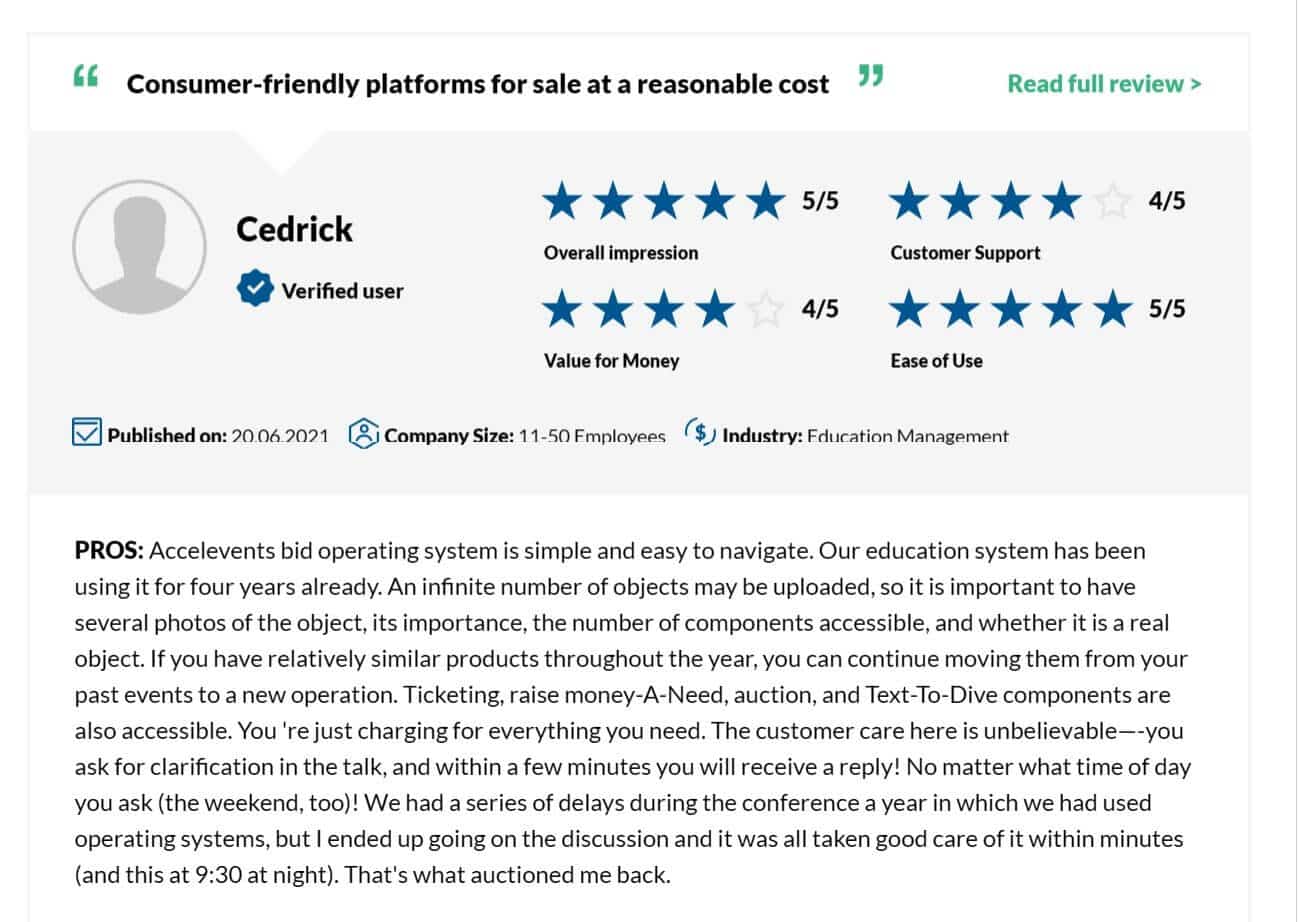
If your event program will grow in scale over the next one to two years, starting on a platform that can handle that growth avoids a second migration down the road.
Sponsor lead capture and cross-event analytics are available on advanced tiers, along with API integrations for CRM and marketing systems. The entry-level Professional plan covers core registration, streaming, and networking—but the reporting and customization depth that makes Accelevents compelling for enterprise use cases requires the Business or Enterprise tier.
Key features
Built-in registration and ticketing with integrated payment processing
Browser-based virtual event hub, with optional native iOS and Android apps
Dedicated admin mobile application for event staff
Branded virtual spaces—lobbies and expo halls—customizable within the platform
Sponsor booths with lead capture and exhibitor analytics
Integrated livestreaming for virtual and hybrid events
Attendee messaging and meeting scheduling
Cross-event reporting on higher-tier plans
API integrations with CRM and marketing systems
Pros
Starting prices for Professional and Business plans are published publicly
Registration, livestreaming, networking, and sponsor management in one system
Virtual environments can be customized with branded lobbies and exhibitor spaces
Sponsor lead capture and analytics tools support exhibitor reporting
Cons
Entry-level pricing starts at €7,500 per event, which may exceed smaller organizations' budgets
Advanced capabilities—cross-event analytics, deeper customization—are gated to higher tiers
Some users report a learning curve when configuring full virtual or hybrid setups
Enterprise and white-label tiers require custom pricing
Pricing
The Professional plan starts at €7,500 per event. The Business plan starts at €13,500 for unlimited events. Enterprise and White Label tiers require custom pricing.
Best for
Accelevents works best for organizations running large-scale virtual or hybrid events that need enterprise-grade infrastructure, customizable virtual environments, and exhibitor programs with lead capture and analytics.
6. Swapcard
Swapcard is an AI-powered event platform combining registration, networking, exhibitor management, and analytics. Attendees access events via web and native mobile apps, and the platform's core differentiator is automated matchmaking that connects attendees, exhibitors, and sponsors.
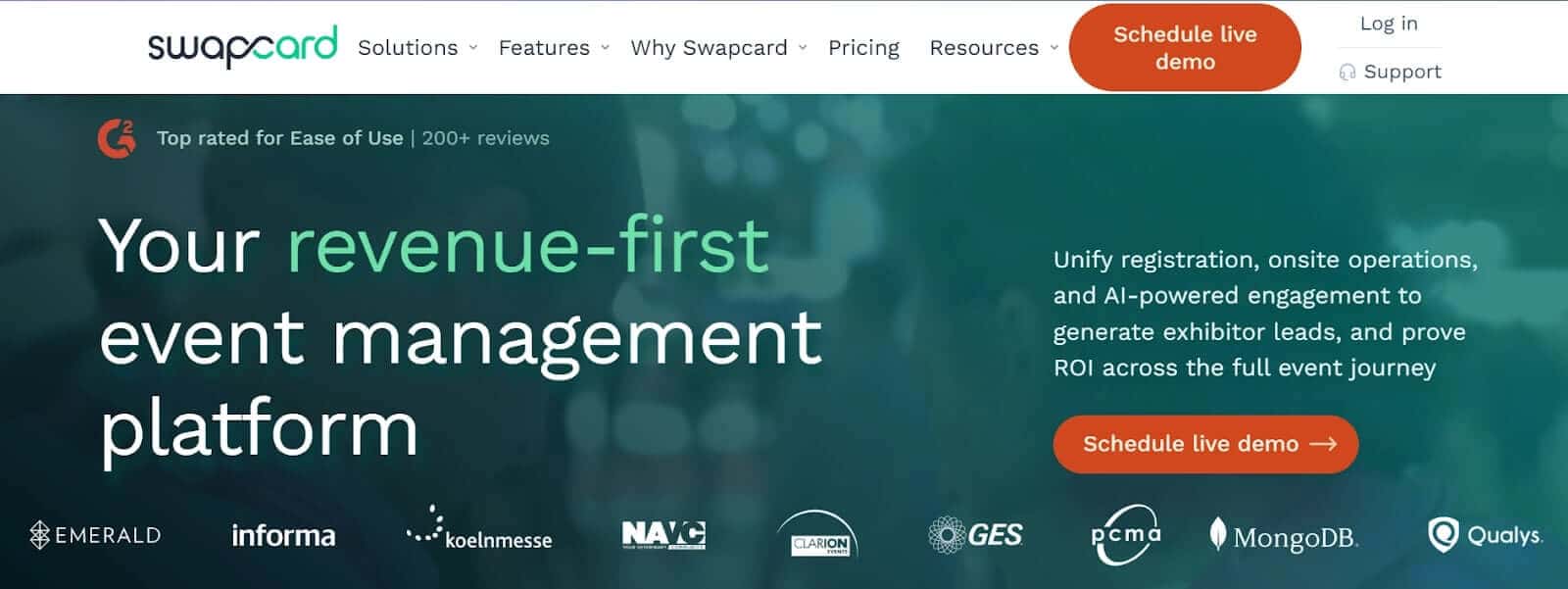
Where EventMobi charges per event and gates features behind higher tiers, Swapcard's annual subscription means the more events you run, the lower your effective cost per event.
Why we chose Swapcard
Swapcard is included for its AI-driven networking and subscription pricing model.
Most event platforms include some form of attendee messaging or meeting scheduling. Swapcard goes further with AI-based matchmaking that analyzes profile data and engagement behavior to recommend specific connections between attendees, exhibitors, and sponsors. For conferences and trade events where the value of attending is directly tied to who you meet, that automated recommendation layer does work that a basic attendee directory doesn't.
Registration, exhibitor lead capture, and analytics are included, so the networking tools don't operate in isolation. Exhibitors track engagement metrics and capture leads directly within the system. The platform integrates with more than 30 CRM and marketing systems, so lead data doesn't stay locked inside Swapcard after the event ends.
Key features
AI-based attendee matchmaking based on profile data and engagement behavior
Web-based access plus native iOS and Android apps
Built-in registration workflows and ticketing management
Exhibitor lead capture and engagement tracking
Customizable event branding across registration pages and attendee-facing environments
Attendee messaging and meeting scheduling
Analytics dashboards for attendee engagement and exhibitor performance
30+ CRM and marketing system integrations
Pros
AI-driven matchmaking automates attendee and exhibitor connection recommendations
Annual subscription model suits organizations running multiple events throughout the year
Exhibitor lead-capture and performance-tracking tools support sponsor reporting
Broad integration ecosystem connects with CRM and marketing platforms
Cons
All plans require an annual subscription commitment
Overage charges may apply if attendee or exhibitor limits are exceeded
Exact pricing beyond the Starter plan requires direct inquiry
Some users report a learning curve when configuring networking and integrations
Pricing
All plans are annual subscriptions. The Starter plan begins at €610/year and supports up to 1,000 attendees. Professional and Enterprise plans require custom pricing and include higher attendee limits and expanded features. Overage charges may apply if attendee thresholds are exceeded.
Best for
Swapcard works best for event teams running multiple events annually where networking quality and automated matchmaking are primary priorities, and where an annual subscription model aligns better with budget planning than per-event pricing.
How to Choose the Right EventMobi Alternative
Start with your current setup
If your registration, ticketing, and check-in workflows already function reliably, replacing them introduces operational risk. Modular tools that layer engagement on top of your existing systems reduce disruption—you add functionality without migrating attendee data or retraining staff.
If you're dissatisfied with multiple parts of your event stack—not just engagement—an all-in-one platform may make sense. Consolidation reduces vendor sprawl but requires centralizing workflows inside a single system.
Match the pricing model to your event frequency
Per-event pricing limits commitment. You pay only when you host an event, which fits organizations running 1–4 events annually. Annual subscription models favor higher event volume—cost per event decreases as frequency increases, but you're committing before confirming long-term fit. Quote-based pricing requires direct conversations to understand total investment, which can extend procurement timelines.
Factor in technical capacity
Self-service platforms with visual editors reduce reliance on IT or external agencies. More complex systems may offer deeper customization but require longer setup and training cycles. A single annual conference doesn't justify the same infrastructure as a portfolio of recurring hybrid programs.
Evaluate the deployment model
Browser-based Progressive Web Apps remove download friction. Native apps may offer deeper device integration but require installation. Universal container apps centralize events into one branded application. Standalone white-label apps prioritize event-specific branding. The right choice depends on which tradeoff aligns with your team's structure—not simply which platform offers the longest feature list.
Watch for red flags in how commitment and pricing are structured
Platforms that require long-term contracts for a single event limit flexibility before you've confirmed whether the system fits your workflow. Pricing revealed only after a sales conversation makes budgeting harder, particularly when final costs depend on add-ons or attendee volume.
Review which features are bundled by default and which require higher-tier plans—so you're not paying for capabilities you won't use. And factor in what adopting the platform would replace: if integration requires moving registration, communications, or attendee data into a new system, the time and operational effort involved matters as much as the subscription price.
Our Final Recommendation
The right EventMobi alternative depends on your situation: budget, technical resources, event frequency, and whether you need to replace your entire event stack or simply add an engagement layer.
If your registration and ticketing systems already work, replacing them may add cost and complexity without solving a new problem. Modular options like LineUpr let you keep existing workflows and add professional attendee engagement starting at €179 per event, with no annual lock-in. You can build and preview your complete event app without entering payment details. Start for free and evaluate it with your team before committing.
If you're consolidating everything into one platform, all-in-one systems like Eventee, Whova, Eventtia, and Accelevents centralize registration, check-in, engagement, and reporting—though most require either annual commitments or quote-based pricing.
If you're running multiple events each year and networking performance is a priority, Swapcard's €610/year Starter subscription offers more predictable costs.
Ultimately, the decision comes down to scope: are you replacing your entire infrastructure, or solving a specific engagement gap?
Try LineUpr for free. Build your event app now and preview the full experience before committing. No credit card, no sales call. Just see if it works for your event.
FAQs
Is there a free EventMobi alternative?
LineUpr lets you build and preview a complete event app for free before upgrading to a paid tier. No credit card is required to create and test the app. Paid plans apply when publishing or using advanced features.
Some enterprise platforms offer demo environments or limited trial access, but full functionality requires a paid plan or annual commitment. Confirm trial scope directly with each vendor during evaluation.
Which alternative has the most transparent pricing?
LineUpr publishes per-event pricing openly: €179, €299, and €539 - so you can see what you'll pay before speaking to sales. Eventee also lists its plan pricing directly on its website. Eventtia's annual plans start at €1,250, and Accelevents publishes starting prices for its Professional and Business tiers.
Swapcard lists its Starter plan at €610/year, though Professional and Enterprise plans require custom pricing. Whova uses a quote-based model, though it publicly discloses its 3.0% + €0.99 per paid ticket processing fee.
Can I use an alternative without changing my registration system?
Yes. LineUpr is designed to work alongside existing registration or ticketing tools and integrates via API if needed. It functions as an engagement layer rather than a full event management replacement.
Most other alternatives in this list include registration as part of their core platform and are structured as consolidated systems.
What's the lowest-cost option for small events?
LineUpr's Plus plan starts at €179 per event. Eventee's Solo plan is €1,499 per event. Swapcard's Starter plan begins at €610/year under an annual subscription. Eventtia's Essential plan starts at €1,250/year, and Accelevents' Professional plan starts at €7,500 per event. Actual cost depends on event size, required features, and subscription commitments.